
Professional Starlink installation in Douala
Starlink can be a valuable Internet source for a hotel, restaurant, residence, office, home or temporary venue in Douala, especially where terrestrial service is slow to install or does not reach the property effectively. The satellite terminal, however, is only the first part of a working business connection. Roof visibility, safe mounting, cable protection, power quality, router location, Wi-Fi design, user demand and ongoing access all influence the result. ATLAS OSPREY provides an installation and network-integration service built around those details.
Our work starts with the intended use rather than the equipment box. A family home streaming video has a different risk profile from a guest house that depends on online reservations, a restaurant taking digital payments or an office running daily video calls. We ask how many people may connect at once, which rooms and outdoor spaces matter, which applications are critical, how long an interruption can be tolerated and who will own the Starlink account. That information guides the survey and written proposal.
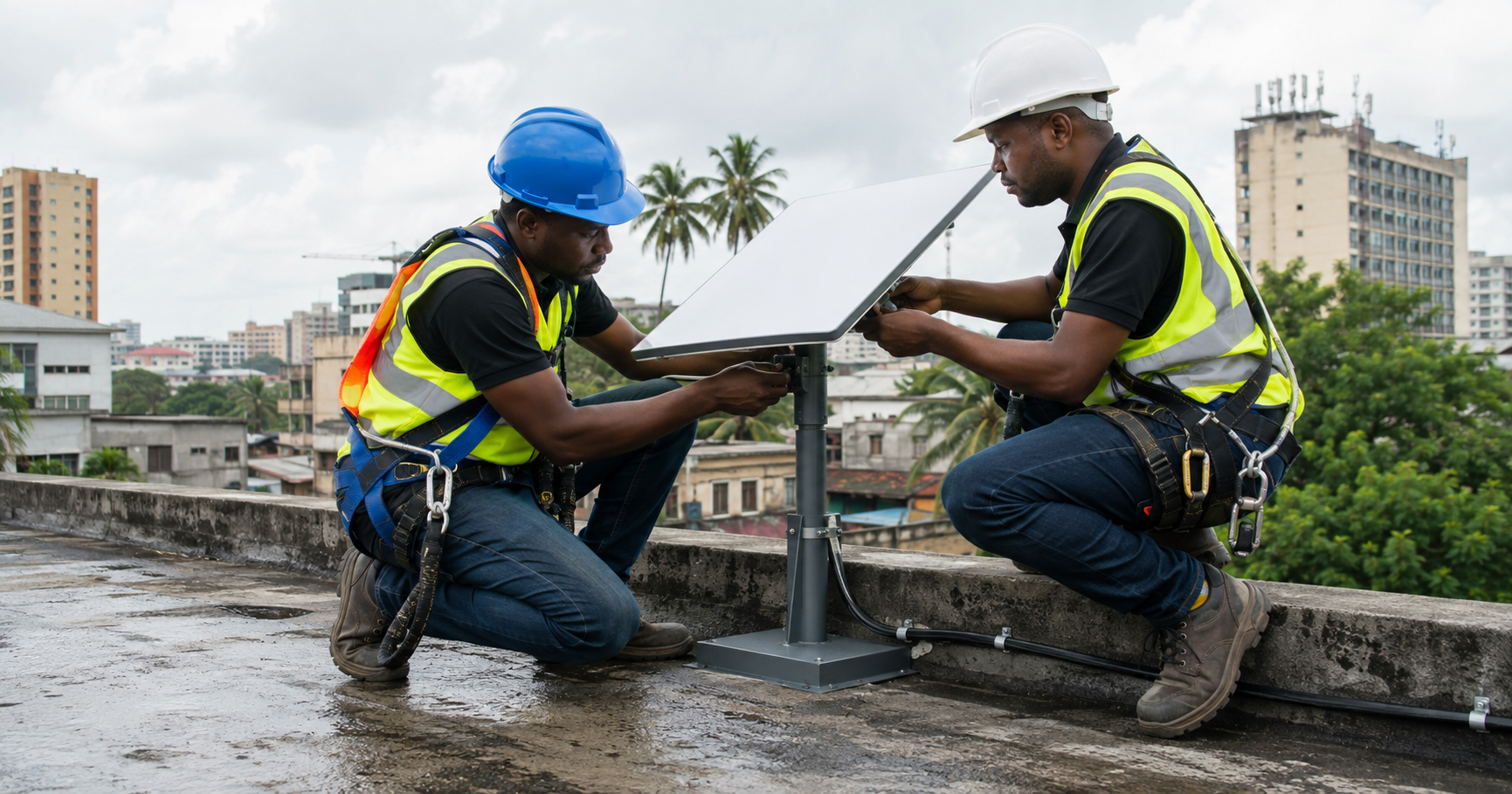
1. Obstruction and mounting assessment
A satellite terminal needs a suitable view of the sky. Trees, walls, roof structures and future construction can affect that view. ATLAS examines practical mounting areas and the path technicians will use to reach them. A proposed mount must suit the structure, local wind exposure, drainage and maintenance access. The survey records assumptions; installation should not proceed from a photograph alone when roof condition, landlord permission or working-at-height safety remains uncertain.
The terminal is positioned for performance without ignoring people and property. We consider falling-object risk, sharp edges, water entry, cable strain and whether future roof work could damage the installation. Drilling, poles, brackets, waterproofing, lightning protection and specialist access equipment are priced only when included in the bill of materials. The customer must approve the mounting position and obtain building or landlord permission.
2. Protected cable and power route
A good signal can still become an unreliable service when the cable is crushed, sharply bent, left in standing water or routed where staff and guests can pull it. ATLAS plans a controlled route from the terminal to the indoor equipment and identifies penetrations, conduit or surface protection that may be required. Distances and obstacles affect labour and material cost. Any hidden electrical, plumbing or structural services must be identified by the property owner before drilling.
Power conditions matter just as much. Brief outages, unstable voltage and surges can restart the terminal or router and interrupt bookings, calls and payments. Depending on the site, the design may include a surge protector, UPS or a larger backup-power system. Backup runtime must be calculated from the actual load and battery condition. It reduces interruption from local power events but cannot guarantee service when equipment, satellite capacity, weather or upstream systems fail.
3. Router and business-network integration
The standard Starlink router may be adequate for a small open room, but it should not be assumed to cover multiple floors, reinforced walls, distant rooms, a restaurant and a pool. ATLAS can inspect the building and design distribution through Ethernet, optical links, switches and managed access points. Existing equipment can be reused only when its condition, capacity, security and management features meet the intended design.
For hotels and businesses, guest traffic should be separated from administration, cameras, payment systems and staff tools when the chosen equipment supports it. Segmentation reduces unnecessary exposure and makes troubleshooting clearer. A branded guest portal, QR access instructions and “Free Wi-Fi” signs are optional customer-experience services. Passwords, administrator credentials and private network information are never printed on public signs.
4. Indoor and outdoor Wi-Fi coverage
Coverage is measured where people use the service, not beside the router. During the survey, identify reception, rooms, offices, corridors, restaurant tables, terraces, pool areas and entrances that matter. Outdoor access points require weather-appropriate hardware, protected power/network paths and acceptable mounting. A possible range of up to 300 metres depends on line of sight, interference, device quality and the environment; it is never a universal radius or guarantee.
Wi-Fi speed on a phone or laptop will not always equal the speed shown by the Starlink application. Distance, obstacles, radio interference, access-point load, device capability and concurrent users all affect the result. The proposal should define representative acceptance points and a test method. A headline speed alone is not a complete acceptance criterion for a property network.
5. Resilience and continuity options
Some sites can tolerate occasional interruption; others need a second path. ATLAS can evaluate a terrestrial provider, a second satellite link or another available connection as failover. Suitable routing equipment can detect certain failures and move traffic, but not every incident is detected instantly and active sessions may restart. Redundancy also requires independent power, separate cable routes where practical, current subscriptions and regular tests.
Weather may reduce satellite performance, and strong wind can expose a weak mount. ENEO or civil work can affect power and cables. Staff may disconnect equipment, and third-party changes may alter the network. ATLAS documents these dependencies so continuity decisions are based on business impact and budget. No marketing page replaces a written service-level agreement.
6. Installation, activation and account ownership
The customer should own the Starlink subscription and recovery contact unless the signed contract states a different managed arrangement. ATLAS can guide activation and local configuration, but Starlink availability, subscription price, fair-use policy, capacity, geographic eligibility and provider terms can change. Hardware availability and account approval are not controlled by ATLAS. The quotation separates provider charges from ATLAS labour, network equipment and optional support.
Installation is scheduled after the proposal, contract and invoice requirements are accepted. The team mounts the approved equipment, routes the agreed cable, connects power/network components, configures the selected router or access points and performs the written tests. The client receives essential handover information, ownership of customer accounts and a route for reporting incidents. Any civil work, extra cabling or equipment discovered outside scope requires written approval.
7. Support after handover
Remote diagnosis can resolve account, routing, access-point and configuration issues when connectivity remains available. On-site work may be needed for the terminal, mount, cable, power or physical equipment. Contact access 24/7 on eligible plans does not mean an instant technician or guaranteed restoration time. Weather, site access, replacement stock and technician availability affect response. The signed support plan defines inclusions and chargeable work.
Equipment reported defective within the stated initial period is inspected before replacement. Damage from water entry outside the approved route, lightning, impact, misuse, negligence, unauthorized changes or staff action is not treated as a manufacturing defect. Manufacturer warranty and applicable law apply according to the contract and purchase evidence.
8. What to prepare for a useful survey
Share the site address and landmark, business type, rooms or floors, outdoor areas, approximate users, critical applications, present Internet source, power situation, desired installation date and photographs of possible mounting areas taken safely from the ground. State whether the building is owned or rented and who can approve drilling or roof access. Do not send passwords, payment credentials or customer data.
ATLAS OSPREY serves Makepe and other eligible locations in Douala, subject to travel, access and technical review. Headquarters reference: Makepe, Rhône Poulenc, SOFFO L building. Call +237 697 885 187 or +237 671 354 223, or use the inquiry form. A conversation begins the study; it does not reserve equipment or confirm installation until the written documents are accepted.